
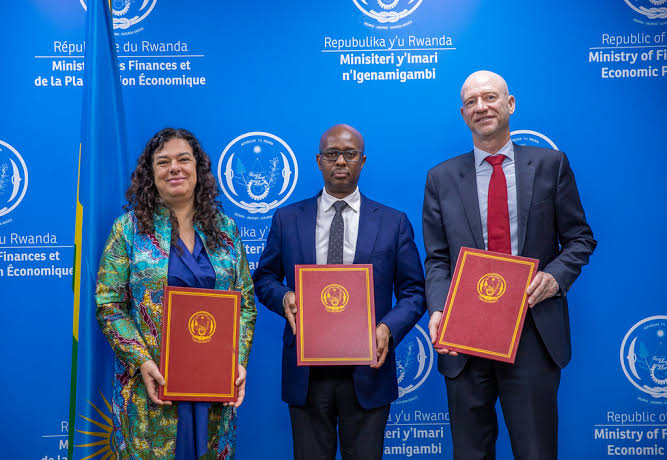
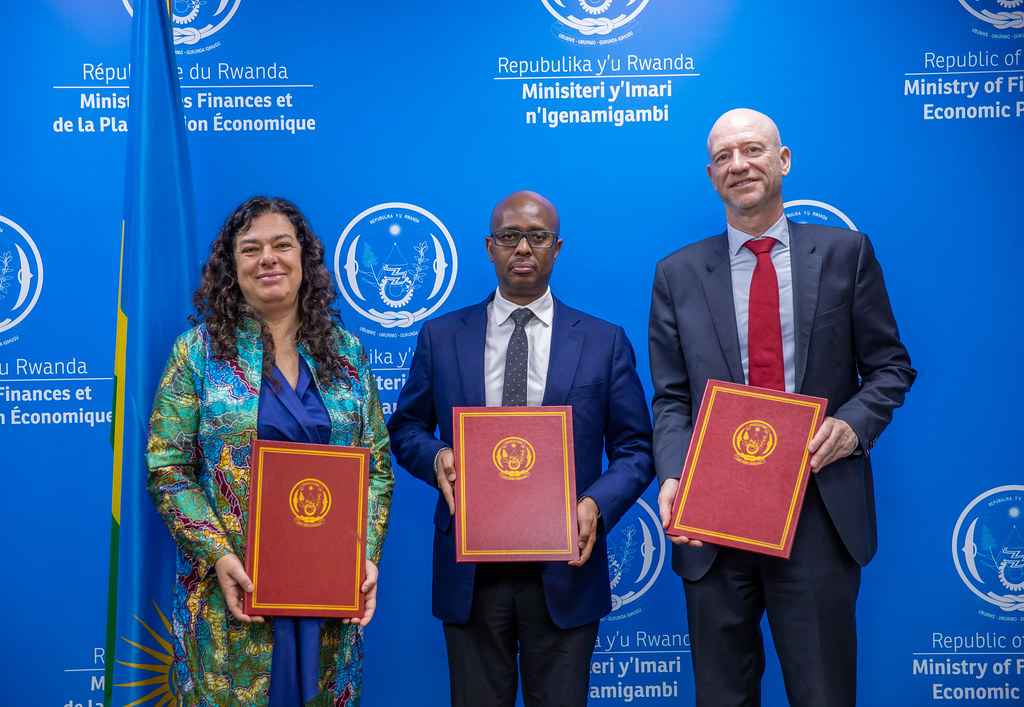
A day after signing its agriculture deal with the EU, Rwanda was back at the table, this time with the European Investment Bank, for an agreement worth even more. On August 5, MINECOFIN and the EIB signed a €65 million financing agreement, roughly Frw109.7 billion, for the Volcanoes Community Resilience Project, aimed squarely at a part of the country that floods, landslides, and soil erosion hit hardest.
Two major climate financing agreements in two consecutive days puts a number on something that’s been true for a while: Rwanda’s north west and eastern regions face real, recurring exposure to extreme weather, and the government is actively lining up financing to address it on multiple fronts at once rather than one project at a time.
Where the Money Goes and Who It’s For
VCRP will run across eight districts, Gakenke, Burera, Musanze, Nyabihu, Rubavu, Rutsiro, Ngororero, and Muhanga, an area covering more than 2.3 million people living in terrain genuinely vulnerable to flooding and landslides. That scale puts VCRP among the more geographically ambitious resilience projects the country has taken on, spanning nearly the entire north western belt in a single coordinated program rather than isolated district level fixes.
The funding will go toward flood risk reduction infrastructure, watershed restoration, landscape rehabilitation, biodiversity conservation, and sustainable livelihood opportunities for the communities living in these districts. That combination is deliberate. Infrastructure alone reduces flood risk in the short term, but pairing it with watershed restoration and livelihood support is what determines whether the improvement actually holds once the initial construction phase ends.
ALSO READ: Rwanda Secures Rwf67 Billion From the EU for Climate Resilient Farming
Who’s Actually Running It
The project sits under the Ministry of Environment, but it’s built to run through several institutions at once: the Rwanda Water Resources Board, the Rwanda Meteorology Agency, the Rwanda Environment Management Authority, and the Rwanda Development Board. That spread makes sense given what the project is trying to do. Flood infrastructure needs the Water Resources Board, early warning systems need meteorology data, environmental protection needs REMA’s regulatory reach, and any livelihood or investment component benefits from RDB’s involvement. It’s less a single project with one owner and more a coordinated response across the institutions that each control a piece of the resilience puzzle.
Part of a Bigger Pattern
VCRP builds on an already active relationship between Rwanda and the EIB around climate action, environmental sustainability, and resilient infrastructure. Combined with the EU’s Hangaribihe agriculture financing signed the day before, Rwanda closed out the first week of August having secured close to Frw177 billion in climate related financing within 48 hours, one focused on transforming how the country farms, the other on protecting the communities most exposed to the weather that farming increasingly has to contend with.
For the 2.3 million people across these eight districts, the test won’t be the signing ceremony either. It’ll be whether the next landslide season arrives to infrastructure and early warning systems that are actually ready for it.
Source: Ministry of Finance and Economic Planning (MINECOFIN), Rwanda, August 5, 2026.