Bralirwa has been around since 1957, brewed beer through decades most of the country would rather forget, and still holds a title that’s easy to overlook: it was the first company ever listed on the Rwanda Stock Exchange. Nearly seven decades in, its half year 2026 results suggest a company that’s found another gear rather than settled into being a legacy name.
What the Numbers Show
Sales volume for the first half of 2026 reached 1,441,000 hectoliters, up 4.8 percent from 1,375,000 the year before, a modest enough gain on its own. But revenue told a sharper story, climbing 20.0 percent to Rwf149.9 billion from Rwf124.9 billion, meaning Bralirwa grew revenue roughly four times faster than volume. That gap is the entire story of the half. It’s not just selling more, it’s selling at better margins and managing what it keeps.
Gross profit rose 21.7 percent to Rwf66.1 billion, pushing the gross margin from 43.5 to 44.1 percent. Bralirwa points to three things behind the revenue growth specifically: higher beer and soft drinks volumes, price adjustments made to offset inflation, and continued strength in its premium portfolio, backed by consumer demand that’s held up better than input cost pressure might suggest.
That input cost pressure shows up clearly on the other side of the ledger. Cost of sales rose 18.6 percent, which the company attributes to higher costs for raw and packaging materials, in line with global inflation and commodity trends rather than anything specific to Rwanda. Selling and distribution costs jumped 24.5 percent, driven by increased brand investment and higher transportation costs to distributors as volumes grew. Administrative expenses rose 16.7 percent, largely from higher IT spending tied to continued investment in digital capabilities and systems, plus inflationary pressure on fixed operating costs. Even with all of that, results from operating activities still climbed to Rwf39 billion, up from Rwf32 billion in the first half of 2025, meaning top line growth outpaced the combined weight of higher input, distribution, and administrative costs. Finance costs actually fell 19.7 percent, which the company links to lower interest on bank overdrafts following improved cash collections during the period, a detail that suggests working capital discipline is doing real work behind the scenes, not just the income statement.
The bottom line reflects all of that compounding in the same direction. Profit before tax rose 30.4 percent to Rwf35.5 billion, and income tax expense rose 15.4 percent in step with higher pre tax profit. Profit after tax and total comprehensive income grew 37.6 percent to Rwf25.3 billion, up from Rwf18.4 billion a year earlier. Net profit margin expanded from 14.7 to 16.9 percent, and EBITDA margin moved from 36.9 to 38.1 percent. For a company operating in a market with real inflationary pressure on input costs, margin expansion at that scale isn’t incidental. It reflects deliberate pricing, premium mix, and cost discipline working together, not just favorable demand.
The Bigger Pattern Behind the Half
This isn’t an isolated quarter of good luck. Bralirwa’s full year 2025 results already showed revenue up 22.1 percent to Rwf262,985 million, driven by a 10.7 percent rise in combined beer and soft drink volumes alongside what the company has repeatedly called a “mix and pricing strategy.” Management has been candid that input costs remain high. The consistent message across both periods is that Bralirwa is managing to grow through that pressure rather than around it, largely by shifting what people buy and what they pay for it, not just how much.
What’s Actually in the Bottle
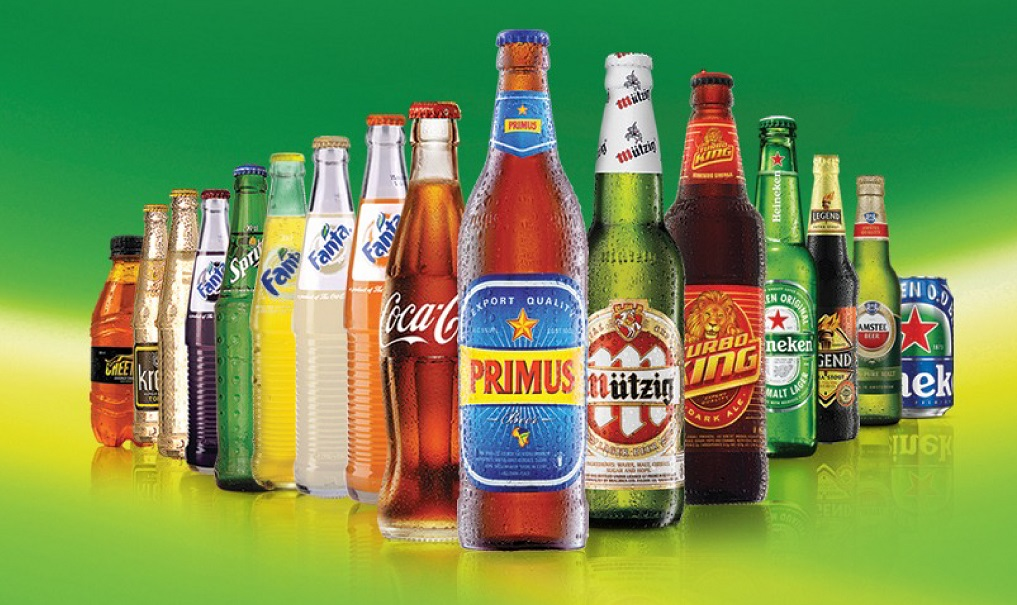
Bralirwa’s business splits cleanly into two segments, beer and soft drinks, and the brand portfolio explains a lot about why it holds the market position it does. On the beer side, it brews and distributes Primus, Mutzig, Turbo King, Amstel, Legend Extra Stout, and Heineken itself, the last of which points to the ownership structure behind the company. Bralirwa is a subsidiary of Heineken NV, giving it access to global brands and brewing standards while operating as a fully local production and distribution business. On the soft drink side, it holds the license for Coca Cola brands including Fanta and Sprite, alongside its own proprietary lines like Vital’o water and Cheetah energy drink.
Production runs out of two integrated facilities, beer out of Gisenyi and soft drinks out of Kigali, backed by a nationwide distribution network that’s arguably as much a competitive advantage as the brands themselves. In a market where getting a cold drink to a rural shop reliably matters as much as the drink itself, that logistics footprint is hard for a new entrant to replicate quickly.
Why This Matters Beyond Beverages
Bralirwa is a useful barometer for consumer spending in Rwanda more broadly. Beer and soft drinks are discretionary purchases, not necessities, so when both volume and pricing power rise together the way they have here, it says something about household spending confidence that GDP figures alone don’t capture as directly. A 69 year old company still expanding margins at this pace is either exceptionally well run, operating in a market with real room left to grow, or both. The first half of 2026 makes a reasonable case for both being true at once.
Sources: Bralirwa PLC unaudited half year 2026 results announcement, Bralirwa 2025 abridged annual report, AfricanFinancials, Rwanda Stock Exchange.